




Prices plus VAT plus shipping costs
Ready to ship today,
Delivery time appr. 5-8 days
- Order number: 7TM0056N
- Content: 100 µl
- Host: Rabbit


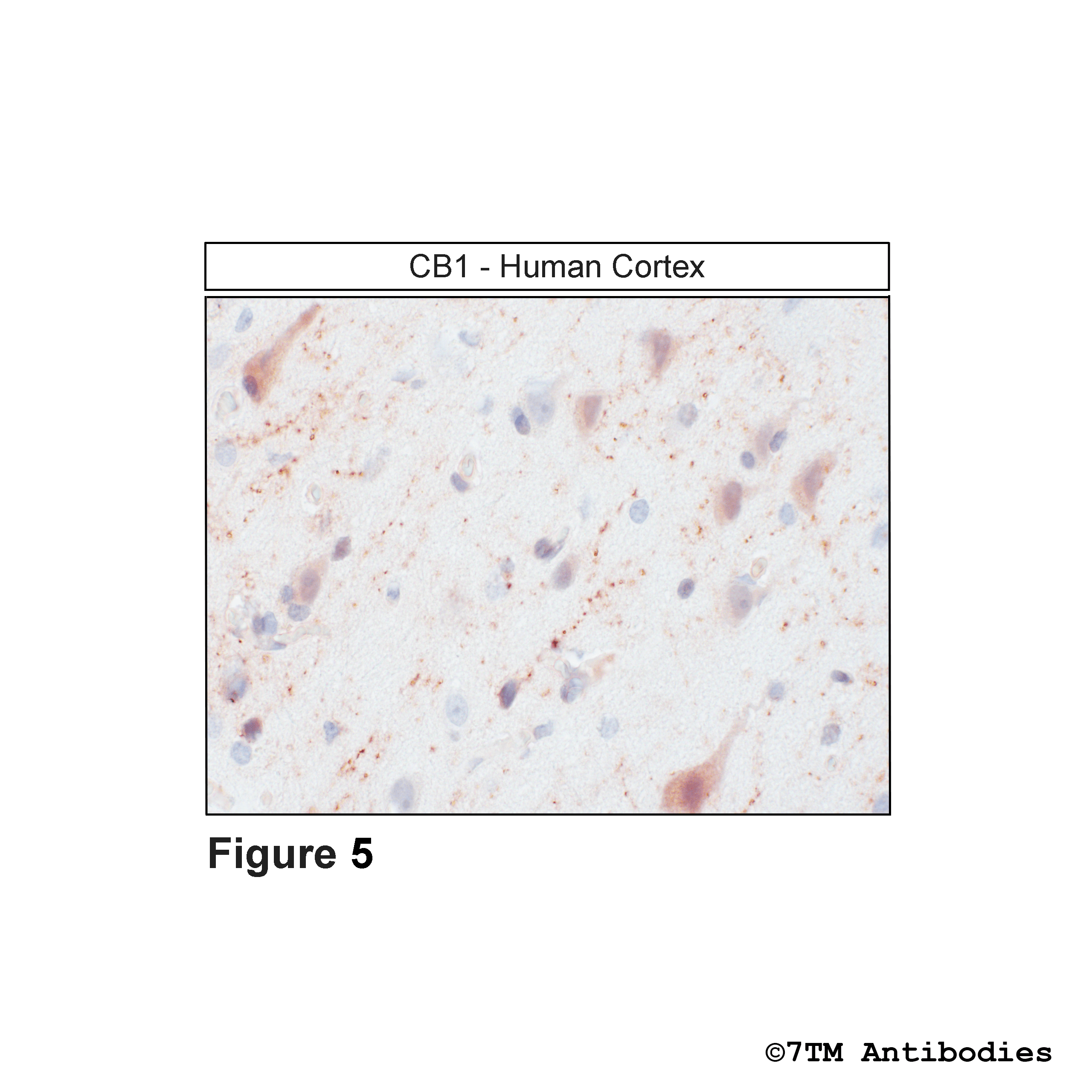
The non-phospho-CB1 receptor antibody is directed against the distal end of the carboxyl-terminal tail of human CB1. It can be used to detect total CB1 receptors in Western blots independent of phosphorylation. The CB1 antibody can also be used to isolate and enrich CB1 receptors from tissue lysates. It also detects CB1 in cultured cells and tissue sections by immunohistochemistry.
| Alternative Names | CB-R, Central Cannabinoid Receptor |
| IUPHAR Target ID | 56 |
| UniProt ID | P21554 |
| Western Blot (WB) | 1:1000 |
| Immunohistochemistry (IHC) | 1:100 |
| Species Reactivity | Human, Mouse, Rat |
| Host / Isotype | Rabbit / IgG |
| Class | Polyclonal |
| Immunogen | A synthetic peptide presents the carboxyl-terminal tail of human CB1. |
| Form | Liquid |
| Purification | Antigen affinity chromatography |
| Storage buffer | Dulbecco's PBS, pH 7.4, with 150 mM NaCl, 0.02% sodium azide |
| Storage conditions | short-term 4°C, long-term -20°C |
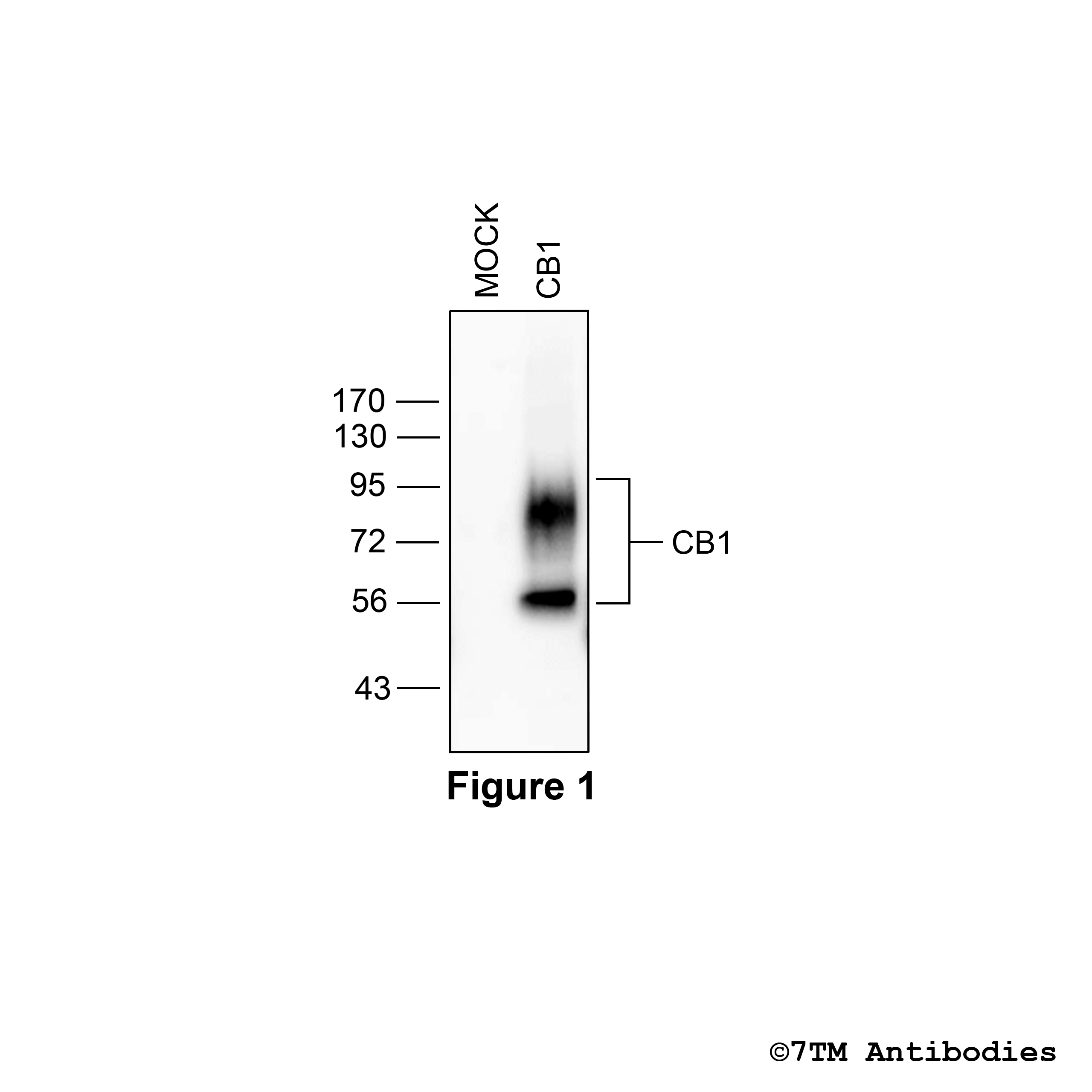
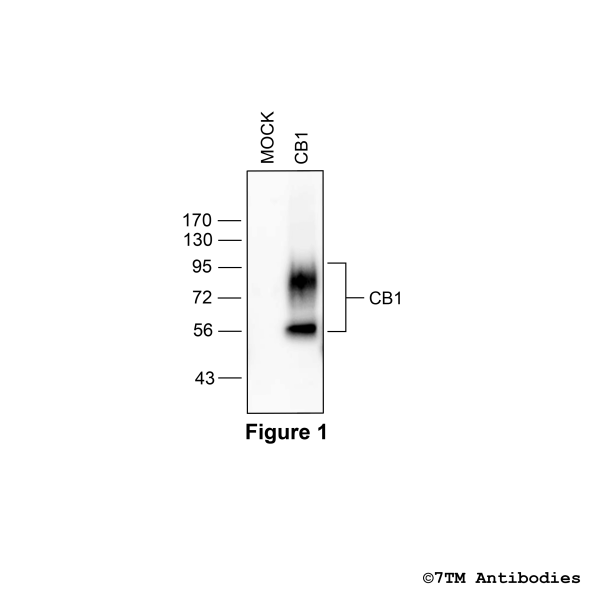
Figure 1. Validation of the Cannabinoid Receptor 1 in transfected HEK293 cells. Native HEK293 cells (MOCK) or HEK293 cells stably expressing the Cannabinoid Receptor 1 (CB1) were lysed and immunoblotted with the anti-CB1 antibody (7TM0056N) at a dilution of 1:1000.
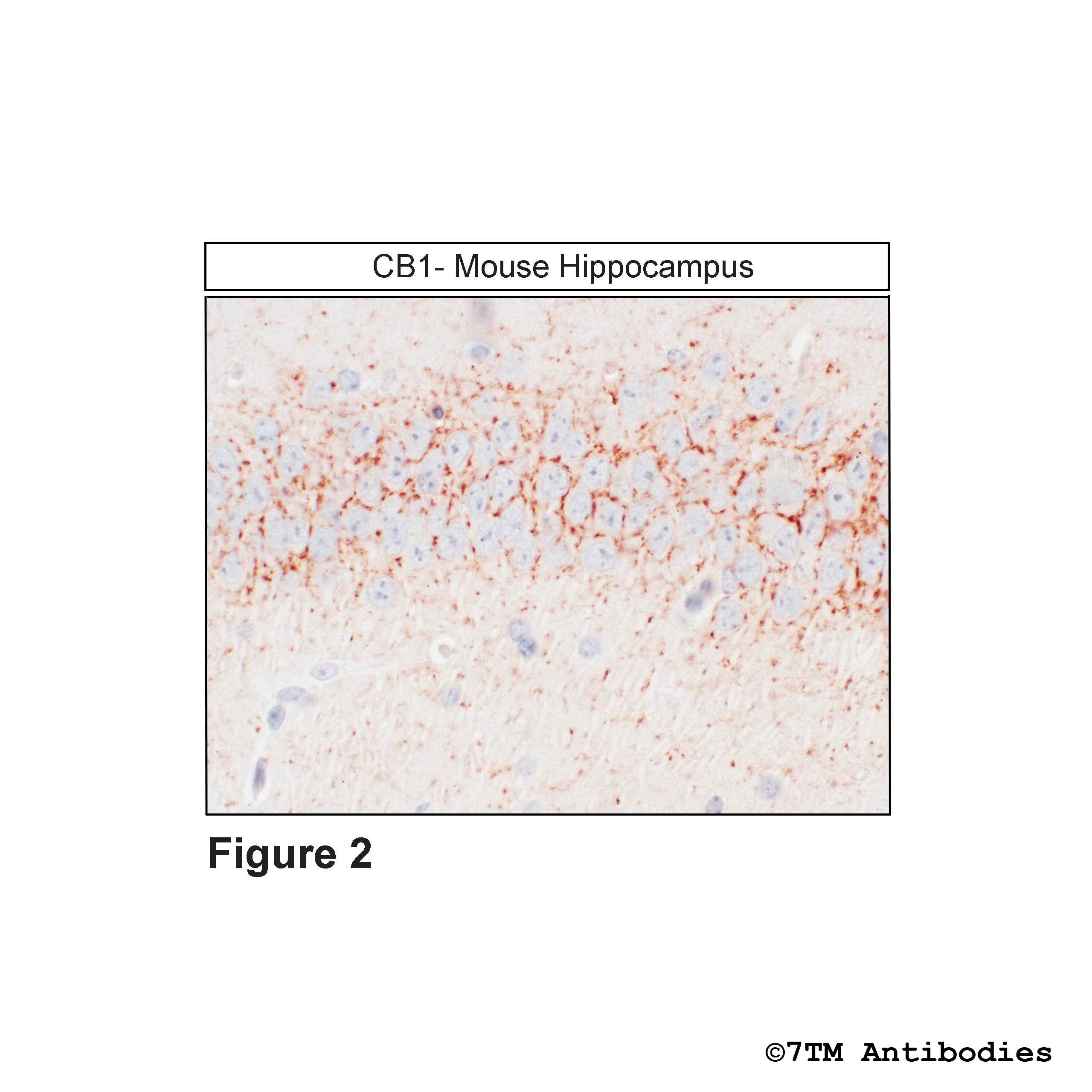
Figure 2. Immunohistochemical identification of the Cannabinoid Receptor 1 in mouse hippocampus. Sections were dewaxed, microwaved in citric acid, and incubated with anti-CB1 (Cannabinoid Receptor 1) antibody (7TM0056N) at a dilution of 1:100. Sections were then sequentially treated with biotinylated anti-rabbit IgG and avidin-biotin solution.Color was developed by incubation in 3-amino-9-ethylcarbazole (AEC), and sections were counterstained with hematoxylin.
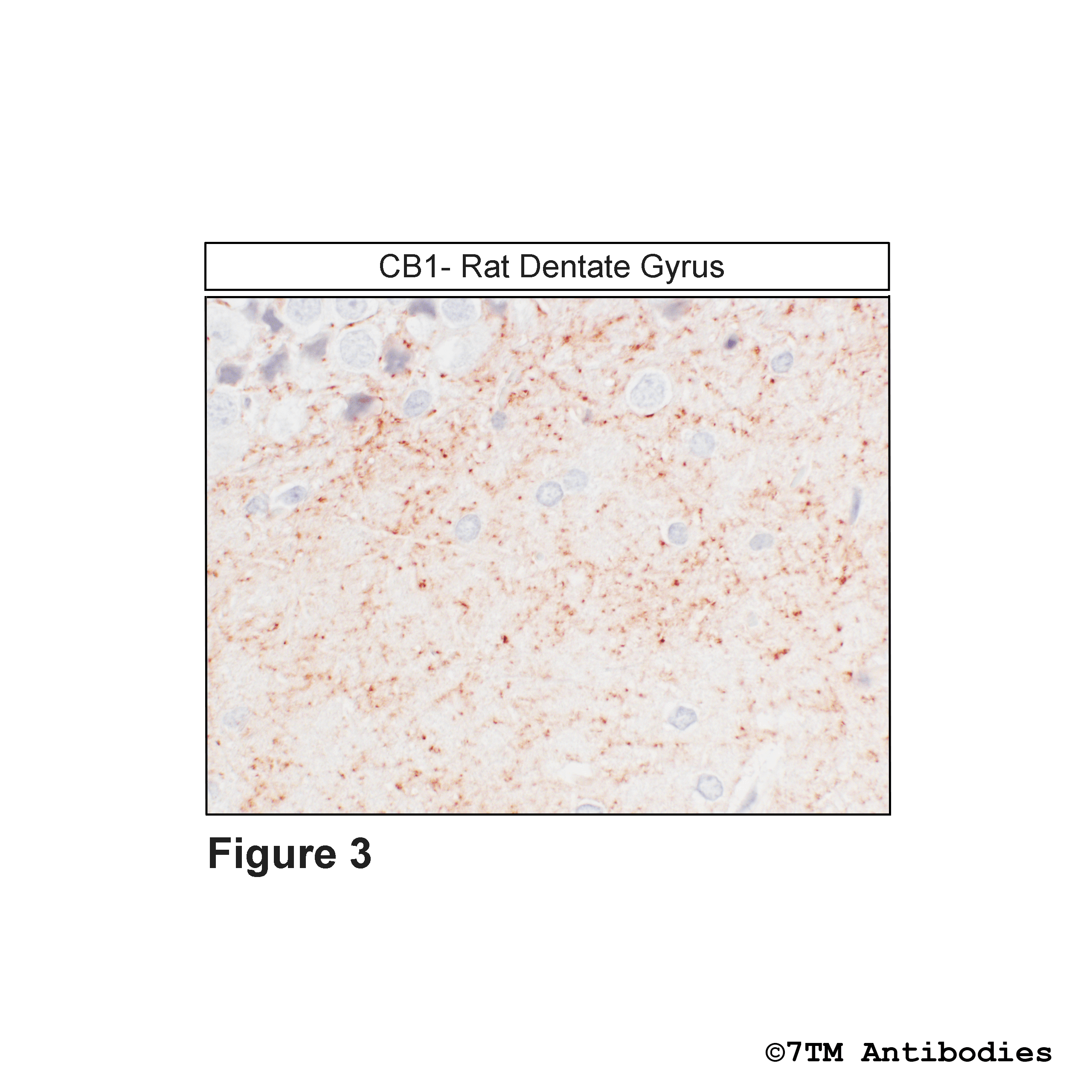
Figure 3. Immunohistochemical identification of the Cannabinoid Receptor 1 in rat dentate gyrus. Sections were dewaxed, microwaved in citric acid, and incubated with anti-CB1 (Cannabinoid Receptor 1) antibody (7TM0056N) at a dilution of 1:100. Sections were then sequentially treated with biotinylated anti-rabbit IgG and avidin-biotin solution.Color was developed by incubation in 3-amino-9-ethylcarbazole (AEC), and sections were counterstained with hematoxylin.
Figure 4. Immunohistochemical identification of the Cannabinoid Receptor 1 in duodenum. Sections were dewaxed, microwaved in citric acid, and incubated with anti-CB1 (Cannabinoid Receptor 1) antibody (7TM0056N) at a dilution of 1:100. Sections were then sequentially treated with biotinylated anti-rabbit IgG and avidin-biotin solution.Color was developed by incubation in 3-amino-9-ethylcarbazole (AEC), and sections were co